The Work
Every approach I use begins in the same place: the body. Not the body as problem — but the body as the most intelligent instrument we have for understanding what has been held, what wants to move, and what we are finally ready to let go of.
The modalities below are not a menu. They are a set of fluent languages, and in our work together, we will find the ones that speak most directly to your system. You do not need to come knowing which one you need. That is what the consultation is for.

Dance Movement Therapy
Dance Movement Therapy is not about dancing. It is about restoring the body's right to speak.
When words have reached their limit. When you know the story but cannot shift the feeling underneath it, movement becomes the portal. We work with impulse, gesture, authentic expression, and the body's innate choreography of emotion. What the body enacts in session often reveals dimensions that years of talking could not reach.
One of the practices I am certified in is Authentic Movement — a form in which you close your eyes, wait for an impulse to arise, and move from it, while I hold full witness. It is quiet, precise, and often profound. Clients frequently describe making connections in movement that language alone had never allowed.
Biodynamic Craniosacral Therapy
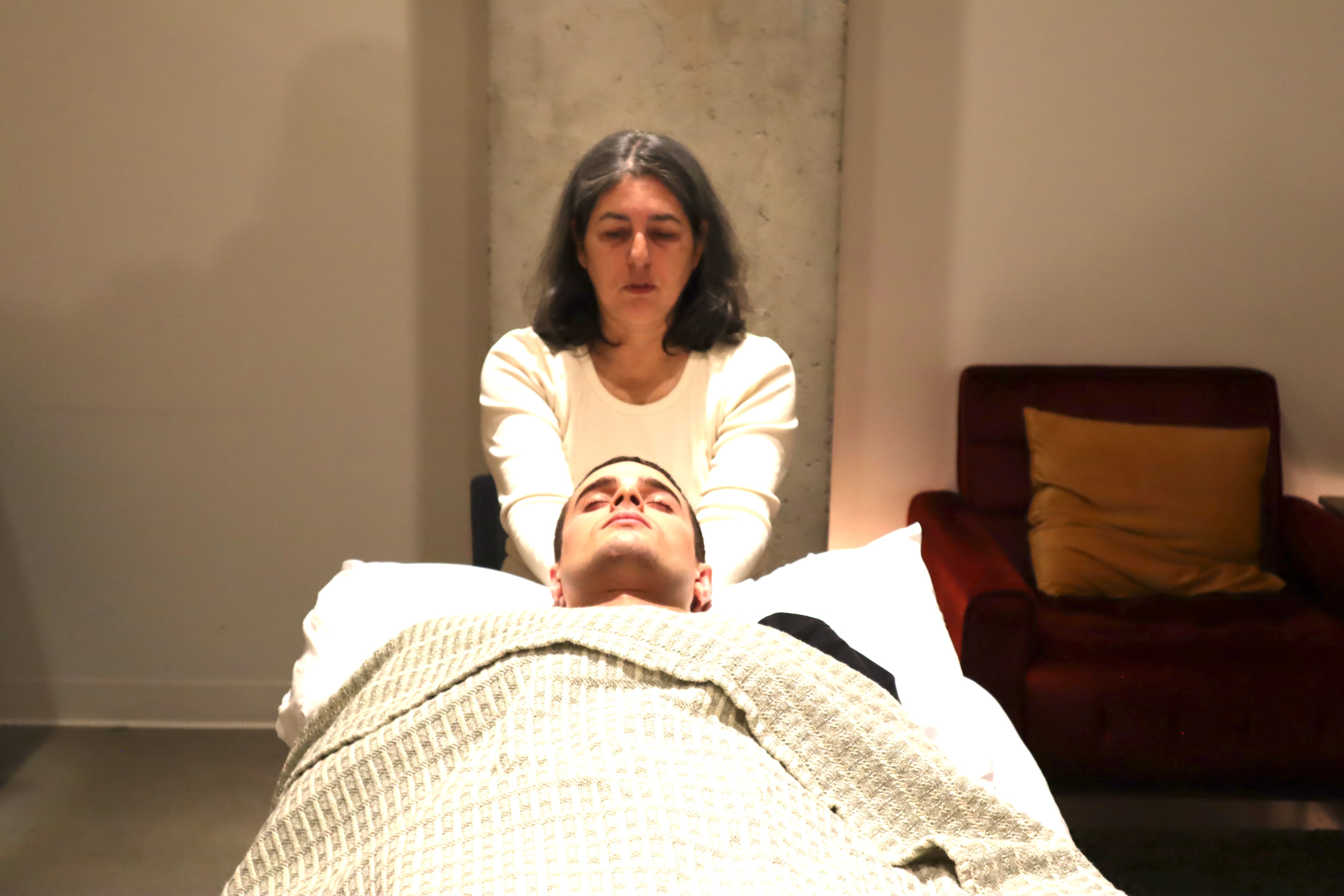
Biodynamic Craniosacral Therapy (BCST) is a form of precision listening. I work with light, attuned touch — at your head, spine, feet, sacrum, and other areas — attending to the subtle rhythms of your cerebrospinal fluid, your cranial bones, the tissue and energy fields of your body. It is quiet. Sometimes wordless. And frequently, deeply transformative.
The premise of this work is simple: the body has an inherent intelligence toward health and integration. What we do is create the conditions under which that intelligence can operate, without forcing, without rushing, without imposing an agenda. What unfolds is the body's own.
Clients sometimes drift into a profound rest during sessions. Others notice emotion arising and releasing, or physical sensations shifting. Some simply feel, for the first time in years, that their cells have been replenished. All of this is the body doing exactly what it knows how to do, when given the space and the witness.

Somatic Therapy
Somatic therapy begins with a radical premise: your body is not a symptom to be managed. It is a source of information, one that has been tracking your experiences, your relationships, and your survival with extraordinary accuracy.
In somatic work, we slow down enough to notice what is happening physically: where sensation lives, where it is absent, how it shifts when we pay attention. We get curious about what the body has learned in response to stress, danger, and early experience — not to excavate trauma, but to gently update the nervous system's understanding of what is safe now.
This is precise work. Not cathartic or directive, but deeply attentive. Over time, clients develop a more fluent relationship with their own internal experience, and a significantly greater capacity to regulate, respond, and feel at home in their bodies.
Trauma-Informed Psychotherapy
Not all trauma announces itself. Much of it arrives quietly, as the way you brace before intimacy, the automatic smallness you take on in certain rooms, the way your body goes flat when something important is at stake. Trauma, at its most precise definition, is anything that overwhelmed the nervous system's capacity to integrate and left something unfinished.
In trauma-informed work, we do not require you to retell your story in order to heal it. We work with what is still active in the body and the nervous system. The survival responses that no longer serve you, the protective patterns that made complete sense then and are costing you now. We approach all of it with care, with curiosity, and at the pace your system determines.


Safe and Sound Protocol (SSP)
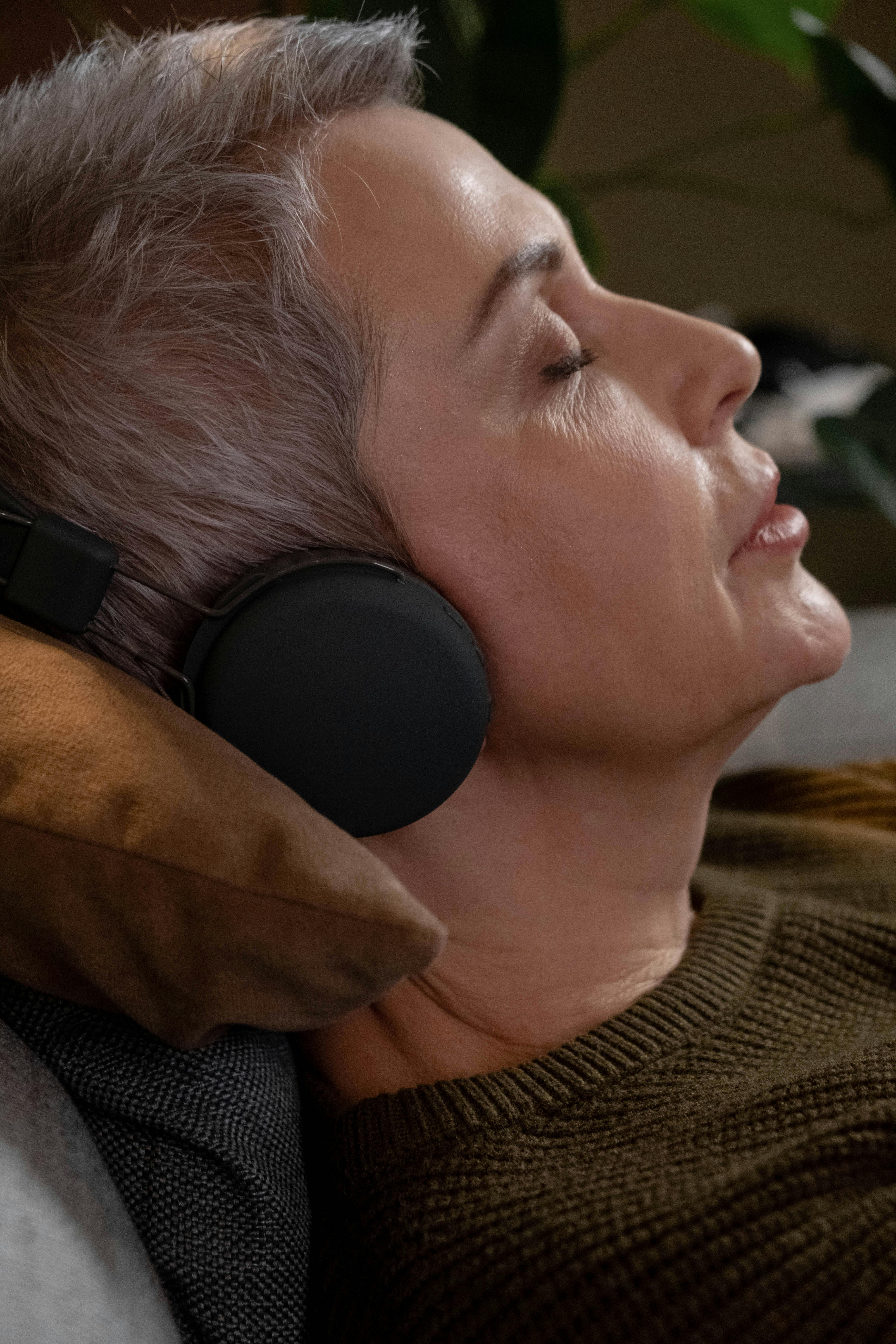
The Safe and Sound Protocol is a research-grounded listening intervention rooted in Polyvagal Theory. Through specially filtered music delivered via headphones, it gently exercises the neural pathways associated with safety, social engagement, and calm, helping to shift the nervous system out of chronic states of threat or disconnection.
SSP is delivered over several sessions, integrated within our broader work. It is precise, non-invasive, and often produces noticeable shifts in the nervous system baseline; clients describe feeling calmer, more socially present, and more able to access the work of therapy with greater ease.
Rest and Restore Protocol
For those who have been running a long time.
The Rest and Restore Protocol is for clients who are depleted, and not in a way that sleep or holiday has been able to address. We are speaking of a nervous system that has never been allowed to fully land. This is the exhaustion of years of high performance, of caregiving, of holding things together. Of never quite stopping.
Through Biodynamic Craniosacral Therapy, somatic grounding, and unhurried presence, we create the conditions for the body's own intelligence to restore itself. Clients often describe leaving these sessions with a quality of rest they had forgotten was possible — a cellular replenishment that feels different from anything they have found elsewhere.
This protocol is also particularly supportive for those navigating perimenopause, menopause, or significant hormonal transitions, where the body is asking, loudly, to be met differently.